
What is Q-Traf ?
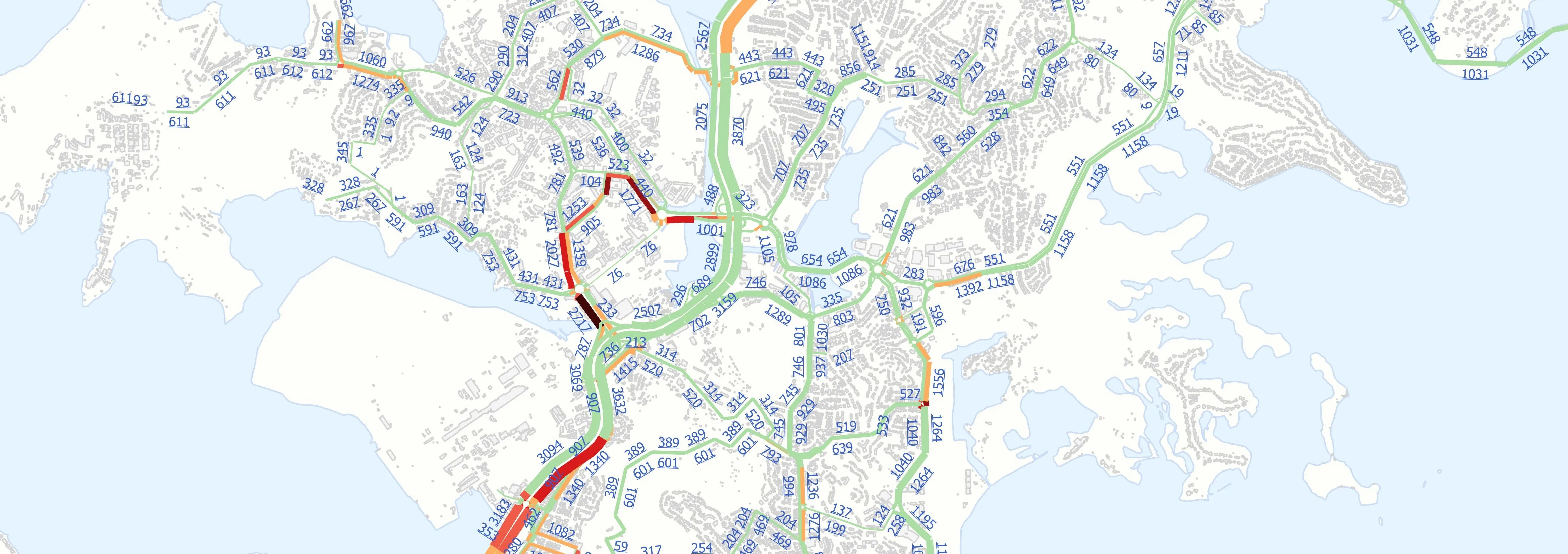
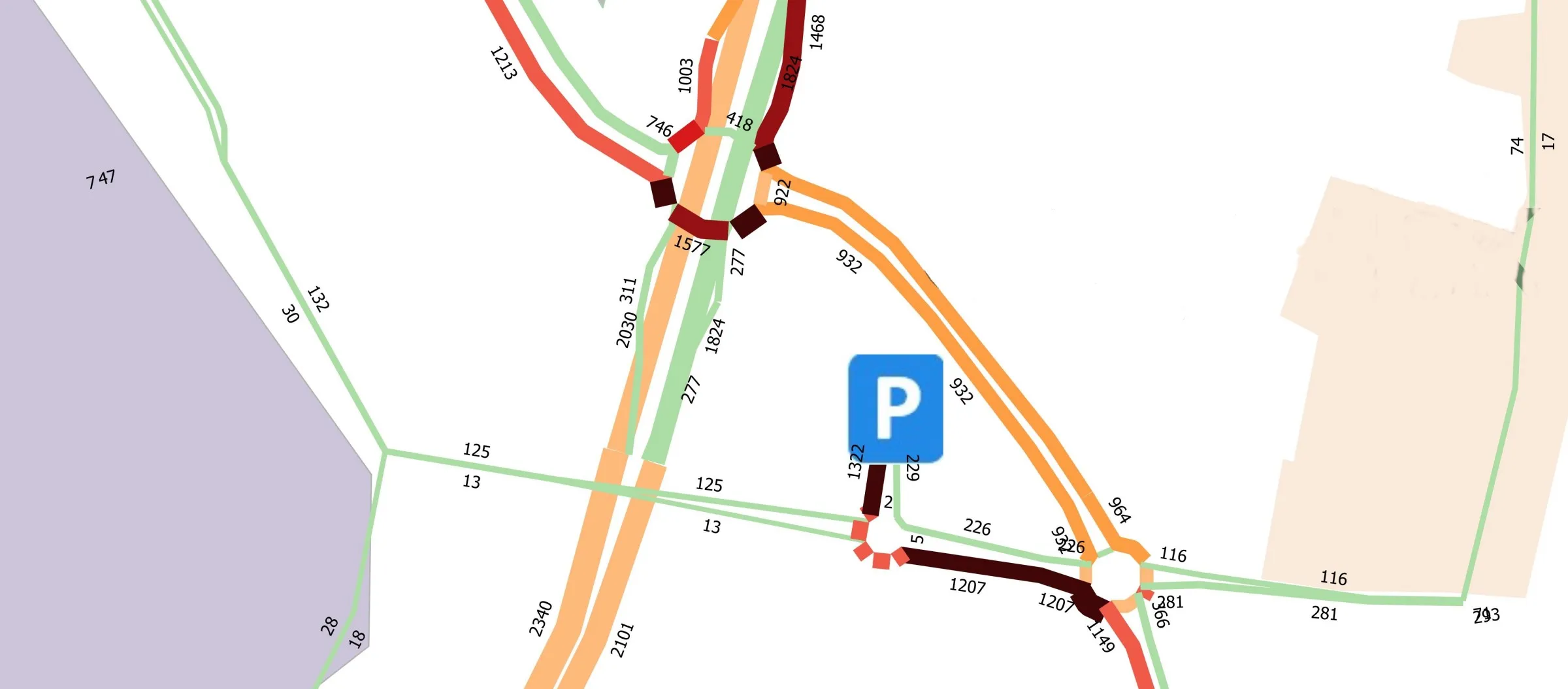
Q-Traf (download here) is a trip-based macroscopic traffic model which calculates and draws traffic flow maps, based on Origin-Destination (O/D) Trip Matrices, by calculating the best route for each vehicle (“static assignment”). “Traffic assignment” is the final step of the “4-steps” urban / transportation modelling.
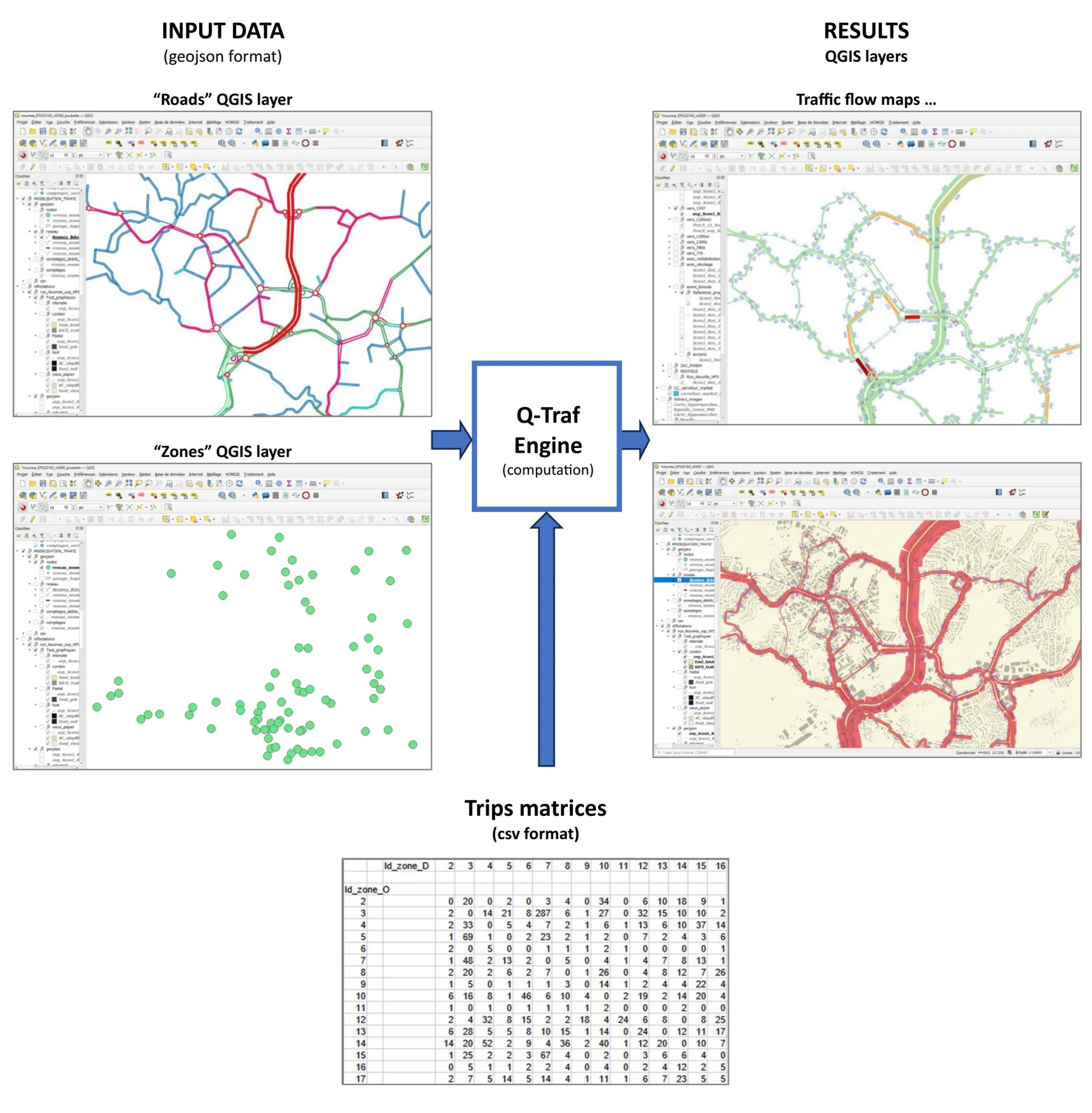
Q-traf uses (as input) and builds (as output) QGIS vector layers.
Q-Traf can manage large scale network, with more than 30 000 links, 2 000 zones, dozens of matrices and 10 different vehicle categories.
Apart from the demand (trip matrices), a large scale road network can be modelling in a day or less if a GIS road layer is already available.

Why Q-Traf ?
There are already a lot of traffic modeling and trips assignment programs.
Q-Traf aims to quickly and easily build an extensive traffic model and impactful traffic flow maps. To achieve this, Q-Traf follows these principles :
- All the road network modelling and data visualization is done with QGis
- Free, without commercial purpose.
- Simple. As it could be
- No coding required.
- Simple open file formats readable as “text” : “*.csv” (matrices) and “*.geojson” (QGis layers) (“*.qtr” for the parameters / settings file which is a text file)
- Portable, in the form of one single executable file. No installation required.
- A good balance between “too many parameters” and “not enough features”
A brief history
Q-traf has been developed over the years to easily perform trips assignments and traffic flow maps, starting in 2014 with a simple Dijkstra algorithm and delay(flow) functions.
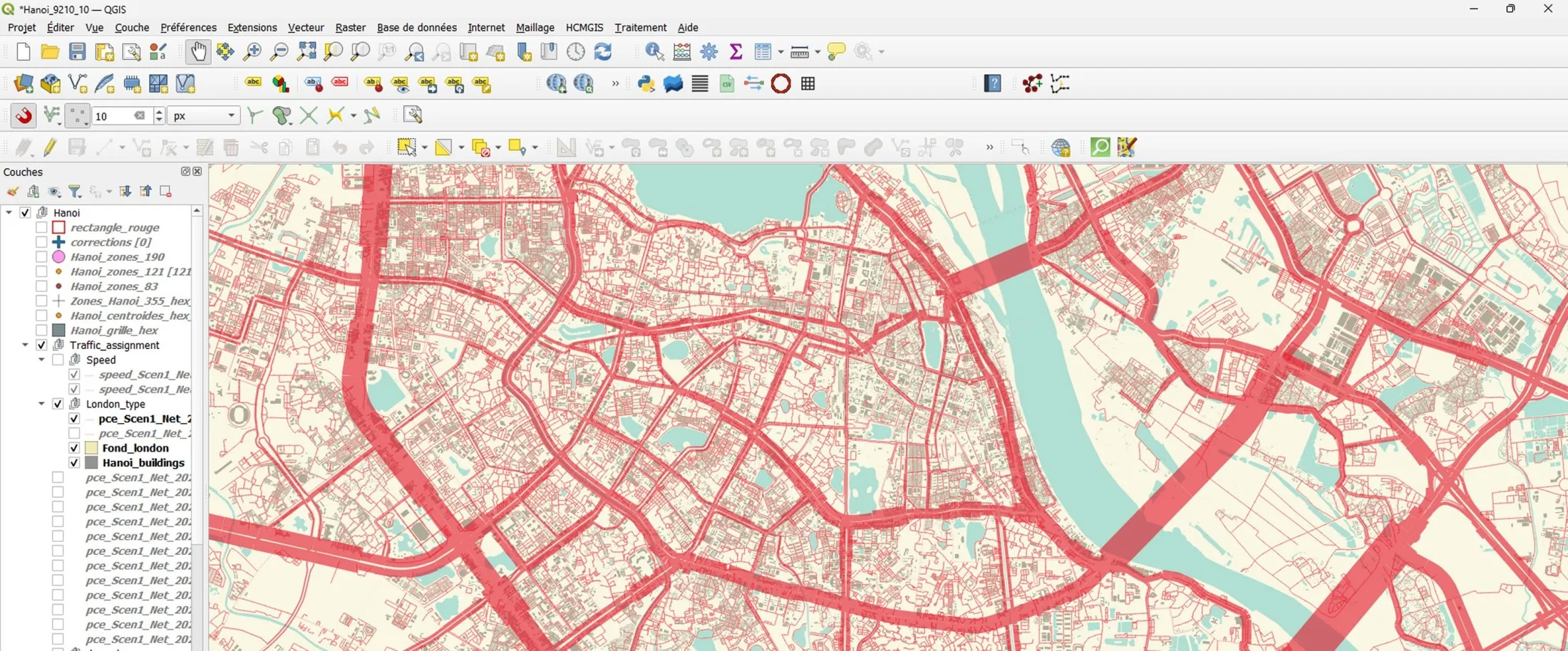
Q-Traf has been developed through years of case studies, relying on QGis for modeling and visualization, and to remain the most user-friendly possible.
Performance and limitations
Q-Traf runs on Windows 10 and 11.
It can handle up to :
- 30 000 links
- 2 000 zones
- 4 main categories of road vehicles (car, truck, bus, pedestrian), 9 sub-types, and 16 Trip Matrices
- Park & Ride (car-bus trip)
- 40 scenarios (sets of networks + matrices, for comparison)
- LHD and RHD
- Day and hour analysis
- provides traffic flow, density, per vehicle type and PCU (Passenger Car Unit), zone analysis, trip matrix adjustment, comparison between scenarios and with traffic counts
(computing 20 000 links and 2 000 zones requires 2 Gb of free RAM)
The graphical results are only limited by what a Gis can do.
Traffic assignment – Method and principles
The basis of the program are :
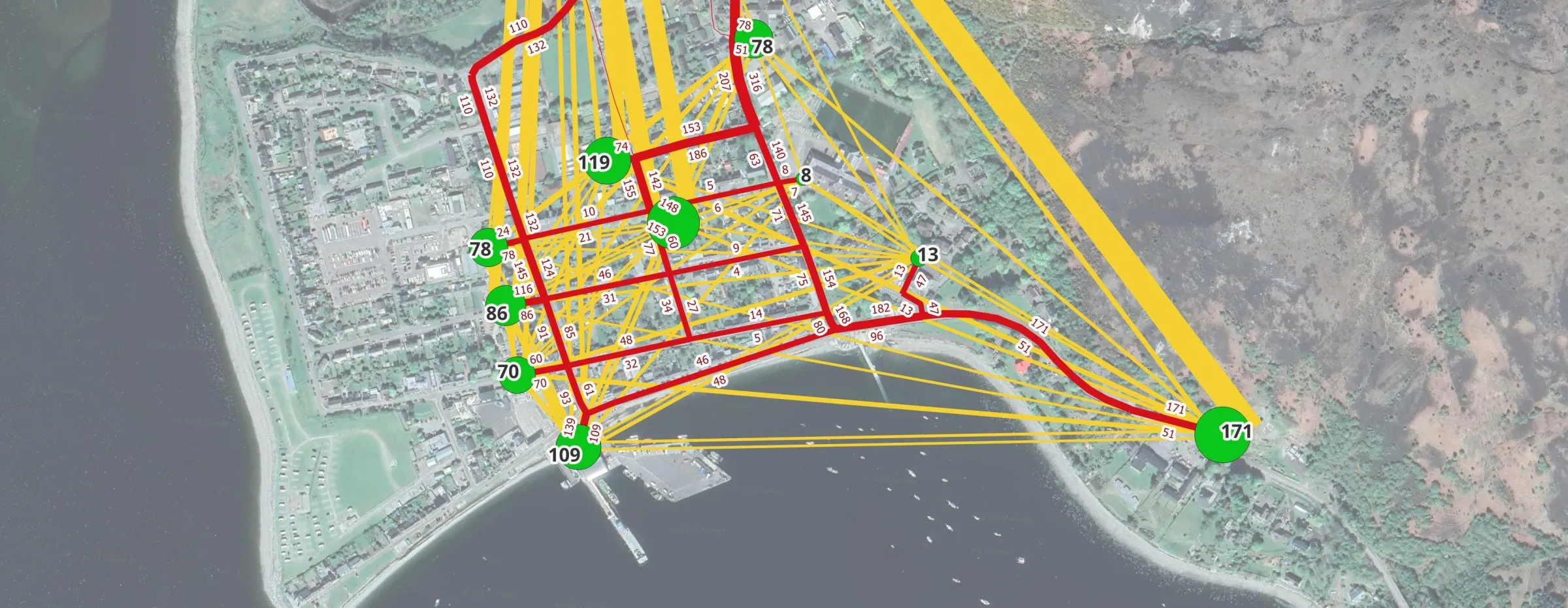
- Method of assignment : MSA (Method of Successive Averages) algorithm. “All or nothing” (for 1 iteration) to “user equilibrium” (the more iterations)
- link delay / performance functions
- generalised travel cost (based on delay, distance and penalties)
Cookie and Privacy Policy
Who are we ?
https://q-traf.com. Hosted on the courtesy of Oceavia, New Caledonia.
Cookie
We don’t track you. But we cannot prevent your device’s IP address from being seen by the internet service provider, our hosting provider, or other internet providers.